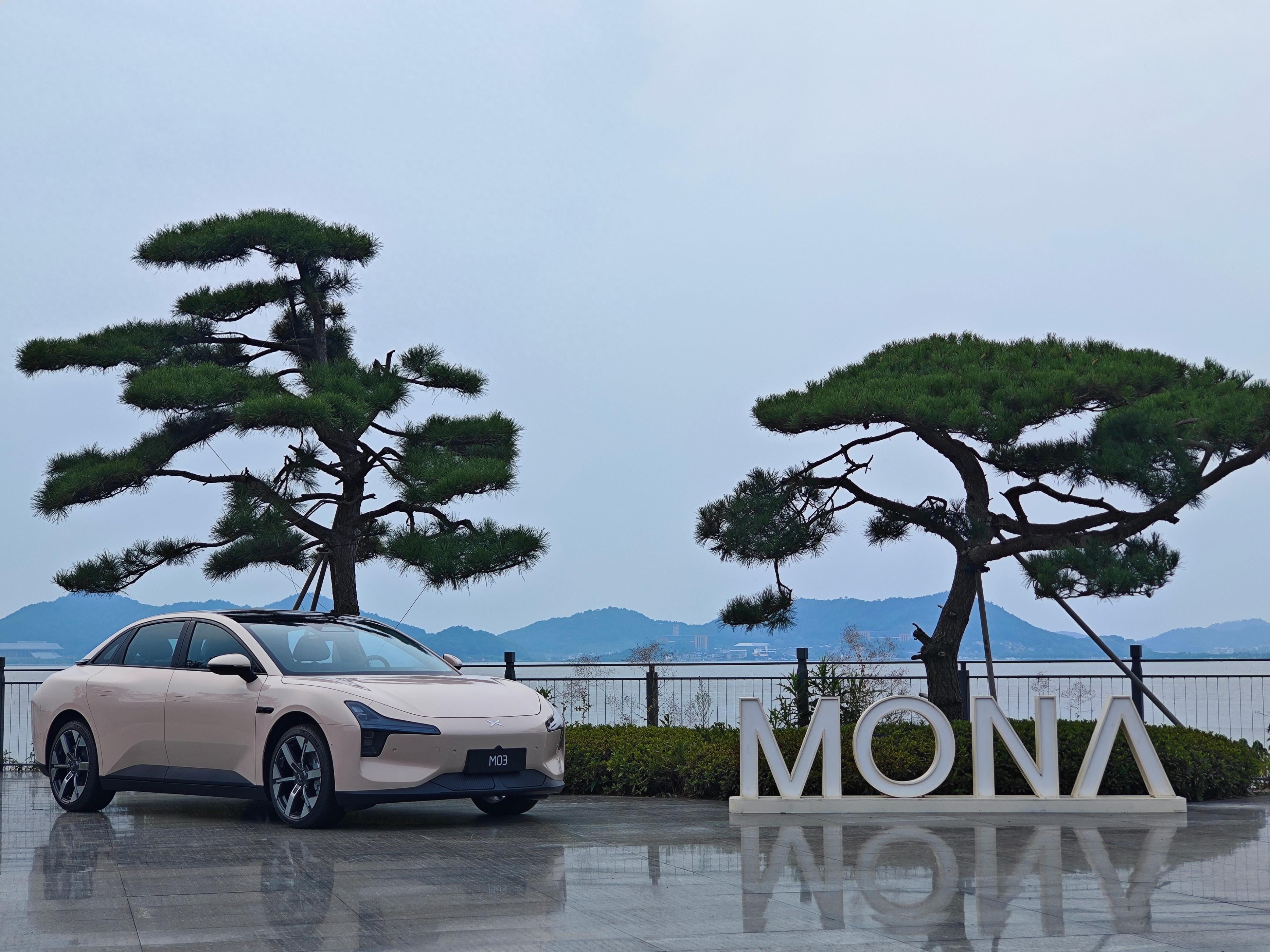
First, nearly 80 new car models were launched in September, followed by record-breaking deliveries from several new energy vehicle companies in October. The "Golden September and Silver October" period for the car market in 2025 can be described as a lively debut and a glorious conclusion.
However, the current development of the new energy vehicle industry is not as smooth as it appears on the surface; rather, it reveals a sense of haste. Recently, several new energy vehicle accidents and owner rights protection incidents have attracted widespread attention on social media. Especially under the current fierce competition, the rapid iteration of new models and technologies has led to a situation where, on the one hand, OEMs are eager to maintain market momentum through rapidly updated new products, while on the other hand, consumers complain that their newly purchased models quickly become outdated. Recently, Li Keqiang, Academician of the Chinese Academy of Engineering, Professor of the School of Vehicle and Transportation at Tsinghua University, and Director of the National Key Laboratory of Intelligent Green Vehicles and Transportation, and Zhu Huarong, Party Secretary and Chairman of Changan Automobile Group Co., Ltd., pointed out on multiple public occasions that the rapid iteration of new energy vehicles exacerbates "involution" and significantly impacts the consumer experience.
Non-stop model updates: Nearly 100 new models released every month
As the saying goes, "In the world of martial arts, speed is the only way to win," and the development of China’s new energy vehicle industry is a good example of this.
In 2013, China’s new energy vehicle production and sales were included in the statistical system for the first time, with an annual production of only 17,500 vehicles and sales of 17,600 vehicles. In 2018, China’s new energy vehicle production and sales reached 1.2705 million and 1.2562 million vehicles respectively. In 2022, China’s new energy vehicle production and sales both exceeded 5 million vehicles. By 2024, China’s new energy vehicle production and sales reached 10 million vehicles for the first time. From the launch of the "863 Program" to the annual production and sales exceeding one million vehicles, it took China nearly 20 years; from one million vehicles to ten million vehicles, it only took 6 years.
The rapid development of the industry is fully reflected in the fast iteration of new energy vehicle products. Following NIO’s simultaneous release of eight updated models and Changan Automobile’s launch of six new models in a single month, the speed at which new energy vehicles are being released has continuously surprised consumers in recent years. Related data shows that as of 2024, domestic automakers launched an average of 1,158 new models annually over the past five years, averaging 3.2 new models per day.
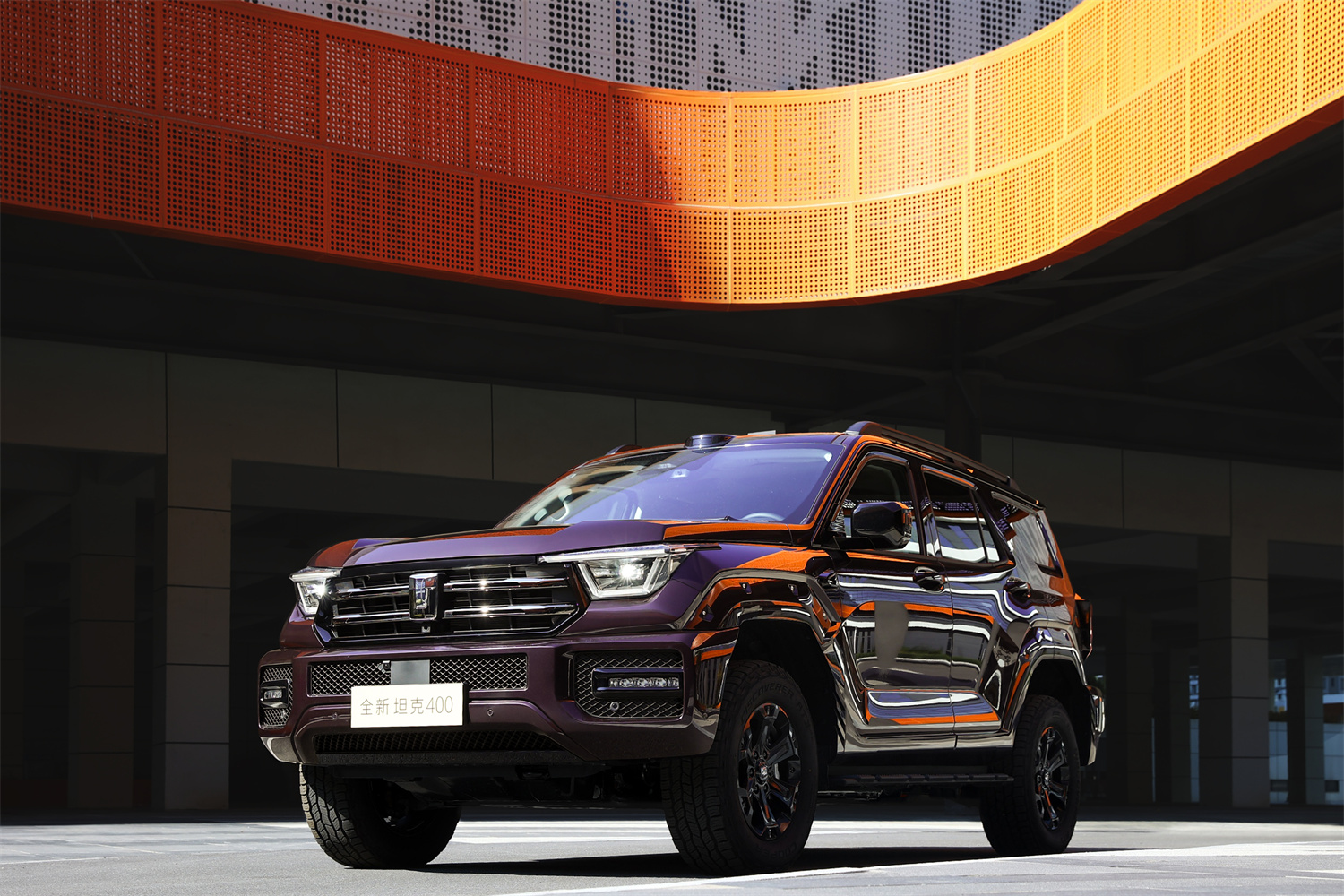
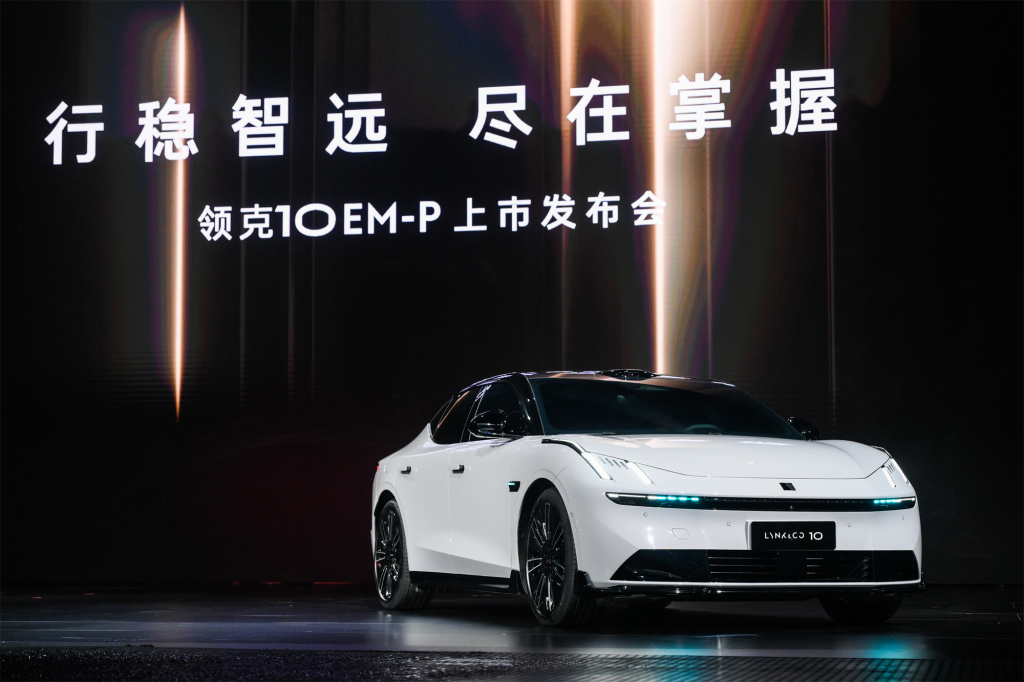
From January to April this year, approximately 430 new car models were launched in the Chinese auto market. In the second half of the year, nearly 80 new models were released in September alone, with new energy vehicles being the dominant force. Apart from facelifted models like the GAC AION RT and the new Lynk & Co 08 EM-P, most of the launched or debuted new energy vehicles were entirely new models. From the Wuling Bingo S to the Denza N8L, from the Buick Jing L7 to the Volvo XC70, these new products cover various market segments, involving both domestic and joint venture brands, and encompassing multiple technological routes including pure electric, plug-in hybrid, and range-extended electric vehicles. Such a high frequency and fast pace of new product launches is truly rare in the meticulously crafted automotive industry.
New models are being launched at an increasingly rapid pace, and the pace of facelifts for older models is equally impressive. The Toyota Camry took over 40 years to evolve into its ninth generation, and the Volkswagen Golf has also undergone eight generations of evolution over more than 40 years. Cars that once required a "facelift every 3 years and a major redesign every 5 years" have now evolved to "facelift every six months and a redesign every year".
"Ten years ago, I felt that new energy vehicles were still a long way off, but now, every year when I return to China, I can feel that Chinese technology and Chinese automakers are constantly moving forward, and the speed of product iteration is very fast." Chris Mason, CEO of the World Federation of Automotive Engineers, exclaimed at the World New Energy Vehicle Conference held in September that China’s new energy vehicle development is rapid and the speed of product iteration has exceeded consumers’ expectations.
Speed First: From "Durable Goods" to "Fast-Moving Consumer Goods"
"Fast" is by no means a bad thing.
As Fu Yuwu, honorary chairman of the China Society of Automotive Engineers, said, "Why are we able to lead in this round of automotive industry transformation? There are many reasons, but diligence is one of the core elements. Chinese people are ’working themselves to the bone’ and never stop." It is precisely because of the hard work of millions of automotive professionals in China that China’s new energy vehicle industry has made rapid progress, and the entire industrial chain and supply chain have accelerated innovation, ensuring China’s current leading position in the global new energy vehicle industry.
Cao He, president of All-China Federation of Automobile Dealers Investment Management (Beijing) Co., Ltd., also believes that China’s new energy vehicle industry must maintain a rapid pace of development to seize the opportunity to overtake competitors and realize the dream of becoming a strong automotive nation. "If development is not fast enough and the market does not experience a major boom, many multinational automakers may gain an advantage in the new energy vehicle sector based on their technological accumulation, and we will lose the opportunity to overtake competitors," Cao He said. Relevant data shows that from January to September 2025, China will contribute 68% of the 3.73 million new energy vehicles added globally. In recent years, China has contributed about 80% of the global increase in new energy vehicles, becoming the core focus of global competition in the new energy vehicle market.
However, "too fast" development can easily lead to frequent problems. Zhu Huarong stated that while China’s new energy vehicle industry is developing rapidly, many underlying issues exist. Products are updated frequently, and existing products often fail to undergo continuous iteration and upgrades, negatively impacting the consumer experience.
Previously, Jikk had already drawn criticism from many car owners due to its rapid model updates. Jikk released the 2023 Jikk 001 in January 2023, the 2024 Jikk 001 in February 2024, and the 2025 Jikk 001 in August of the same year. This means that the Jikk 001 underwent three updates in just over a year, leading netizens to jokingly call it "three swords in one year." Some existing car owners felt betrayed and launched offline protests. Subsequently, Jikk offered compensation to all owners of the 2024 Jikk 007 who had placed orders before 8 PM on August 13, 2024, but whose cars had not yet been put into production. They were offered a free upgrade to the 2025 model, and the existing car owners were given a purchase voucher worth 10,000 yuan.
Not long ago, some Geely Galaxy Star Wish car owners complained on relevant platforms that Geely failed to inform them of the new and old model iterations of the Galaxy Star Wish, thus infringing on their consumer rights. One netizen stated that they paid a 3,000 yuan deposit on October 2nd and signed the contract on October 7th to purchase a Geely Star Wish 2025 UP 410 Exploration Edition. On October 10th, Geely Galaxy released the 2026 Star Wish, offering upgraded features at the same price. "It’s like my new car, which I haven’t even picked up yet, has become the old model with lower specifications," the netizen complained, adding that the dealer did not inform them of the upcoming new model in advance, suggesting they were misleading consumers into clearing out old inventory and concealing information from them.
The constant stream of new car launches has left many consumers both envious and worried, leading to a strong wait-and-see attitude. Mr. Liu, a car owner living in Zhengzhou, Henan, said, "I wanted to switch to a new energy vehicle at the beginning of the year. I looked at many models, and every one of them was good, but there are always new models coming out soon with richer features. Now I’m tired of choosing. I feel that my gasoline car can still be driven, so I plan to wait a bit longer."
Besides the fact that new models can "instantly" become old models, what worries consumers even more is whether the safety and quality of new cars can be guaranteed with such rapid iteration. From vehicle fires to sudden deactivation of intelligent driving systems and doors that cannot be opened, various accidents involving new energy vehicles in recent years have deepened consumers’ concerns about their safety and led to new energy vehicles being labeled as "not safe enough".
Recently, a Li Auto MEGA vehicle spontaneously combusted while driving. Li Auto subsequently issued a voluntary recall for 2024 Li MEGA vehicles manufactured between February 18, 2024, and December 27, 2024, stating that the coolant in this batch had insufficient corrosion resistance, which could cause thermal runaway of the power battery in extreme cases. Previously, Xiaomi Auto recalled over 110,000 SU7 standard version electric vehicles because some vehicles, under certain conditions with the L2 highway cruise control assist function activated, might have insufficient recognition, warning, or handling of extreme and special scenarios, potentially increasing the risk of collision if the driver does not intervene in time.
"On the one hand, the production and sales of new energy vehicles are developing rapidly; on the other hand, the number of consumer complaints due to quality defects has also increased unprecedentedly," Fu Yuwu stated bluntly. He added that the number of vehicle quality defects for some companies has even multiplied, exposing significant safety hazards. According to the 2025 China New Energy Vehicle Reliability Study (NEV-VDS) Pilot survey results released by JD Power, the overall number of long-term reliability complaints for new energy vehicles was 244 PP100 (problems per 100 vehicles), significantly higher than that for gasoline vehicles. Among the long-term quality complaints for new energy vehicles, the growth rate of complaints about malfunctions was significantly higher than that of complaints about design flaws.
"Do whatever is popular": The root cause lies in "involution".
"Market competition demands rapid iteration." While expressing concern about the various problems that overly rapid product iterations may cause to consumers, Zhu Huarong also voiced the helplessness of many automakers. Rather than saying that automakers want to iterate quickly, it’s more accurate to say that the increasingly fierce market competition requires automakers to maintain a rapid pace of iteration, otherwise they risk being abandoned by the market and the public.
In an interview with China Automotive News, You Tianyu, Dean of the Kailian Capital Research Institute, stated that amidst the fierce competition in the new energy vehicle market, automakers need to rapidly iterate to maintain their competitiveness. However, along with the overwhelming number of new products comes the increasingly prominent problem of homogenization. From hidden door handles to new hardcore off-road tracks to automaker executives doing live streams, today’s new energy vehicles, from design and models to marketing, no longer exhibit a vibrant diversity but rather a sense of déjà vu.
The practice of "doing whatever is popular" actually exposes the confusion and blindness of some new energy vehicle companies in their strategic planning. At the same time, Tianyu pointed out: "Imperfect regulations and an incomplete patent system lead to very low costs for copying. This is not only a problem faced by the automotive industry, but also by many industries in China, which undoubtedly intensifies competition."
The increasing homogenization of products undoubtedly represents a huge waste of resources. Li Xueyong, Executive Vice President of Chery Automobile, recently stated, "In the past year (2024), approximately 710 new car models were launched in China, but only 10% achieved monthly sales exceeding 5,000 units. Of the more than 700 models, only 69 met this target, let alone the blockbuster models with monthly sales exceeding 10,000 units." Despite the large number of new products, sales have been disappointing, rendering the investments made behind them futile, and continuously squeezing the profits of automakers through repeated iterations for the sake of iteration.
According to Cui Dongshu, Secretary-General of the Passenger Car Association of the China Automobile Dealers Association, the profit margin of China’s automotive industry was only 4.5% from January to September, which is still relatively low compared to the average profit margin of 6% for downstream industrial enterprises. Among new energy vehicle companies, very few are still profitable. In the first three quarters of this year, BYD’s net profit reached 23.33 billion yuan, a year-on-year decrease of 7.6%. In the first half of this year, Li Auto’s net profit was 1.743 billion yuan, a slight year-on-year increase of 2.82%. However, according to Chaoyang Yongxu’s forecast, Li Auto’s net profit in the third quarter was 162 million to 200 million yuan, a significant year-on-year decline of 94.2% to 93%. In the first half of this year, Leapmotor’s net profit attributable to the parent company was 30 million yuan. XPeng Motors, aiming for profitability in the fourth quarter, reported a net loss of 1.14 billion yuan in the first half of the year, narrowing compared to the same period last year. Meanwhile, NIO, which also plans to be profitable in the fourth quarter, saw its net loss widen to 12.03 billion yuan in the first half of the year.
The "involutionary" competition has led not only to increasingly homogenized products and shrinking corporate profits, but also to increasingly prominent safety hazards. To gain a competitive edge, many automakers have begun shortening vehicle development cycles from 36-48 months in the era of gasoline-powered vehicles to 12-18 months today. While this shortening is undoubtedly due to the application of innovative technologies such as central computing platforms and simulation testing, the rapid iteration has also exposed some safety risks.
"The original R&D cycle for a product, from design to production, was 36 months. Now it has been shortened, but some companies insist on making it in 10 months, which is definitely not in line with the laws of development. Prototype, product finalization, small batch, large batch, mass production—no step can be omitted! Some companies produce prototypes but haven’t completed sufficient environmental and high-altitude tests before starting mass production. It’s no wonder there are accidents!" Fu Yuwu bluntly stated that the R&D cycle for automobiles has strict procedures and standards. Shortening the testing time for summer and winter tests in pursuit of a faster market launch, and relying solely on simulation technology, is absolutely unacceptable.
Lu Fang, Chairman and General Manager of Voyah Automobile Technology Co., Ltd., previously emphasized that automobiles are by no means fast-moving consumer goods, and that the fundamentals should not be reversed. In his view, the current automotive industry is showing a clear trend towards "fast-moving consumer goods," with faster new car iterations, increasingly diversified marketing methods, and changing consumer attitudes, shortening the car replacement cycle to 3-5 years. "True innovation is not just about ’speed’," Lu Fang stressed, emphasizing that a fast pace should not sacrifice high quality and reliability.
Persistence is key: Long-termism must be put into practice.
"Rather than asking whether industrial development should be fast or slow, it’s more accurate to say that the automotive industry needs to maintain an appropriate, reasonable, and scientific pace of development," said Fu Yuwu. He explained that thanks to the rapid development of the new energy vehicle industry, China has now formed an innovation culture covering the entire industrial chain, supply chain, and ecosystem, supporting the formation of the world’s largest and most complete new energy vehicle industrial chain. However, blindly pursuing speed will inevitably lead to disarray and a loss of rhythm.
According to You Tianyu, with the phasing out of subsidies for new energy vehicles and the market share of new energy vehicles exceeding 50%, the growth rate of new energy vehicles will gradually slow down in 2026. "However, the various problems currently appearing in the new energy vehicle industry, seemingly due to excessively rapid growth and iteration, actually mean that the market will become more ’turbulent’ after the growth rate slows down." You Tianyu believes that there are still too many participants in the current new energy vehicle market, and the market is saturated. Many automakers are struggling to survive even at a loss. After the policy support weakens, market competition will become more intense, accelerating industry reshuffling, and further squeezing the survival space of automakers lacking technological strength and product differentiation capabilities.
The "Suggestions of the CPC Central Committee on Formulating the 15th Five-Year Plan for National Economic and Social Development," released on October 28, not only explicitly points out the need to "improve the institutional mechanisms for promoting consumption and eliminate unreasonable restrictive measures on consumption such as automobiles and housing," but also emphasizes "breaking down local protectionism and market segmentation" and "comprehensively rectifying ’involutionary’ competition." Tianyu believes that during the 15th Five-Year Plan period, with the orderly withdrawal of production capacity in some regions, the curbing of disorderly investment by some local governments, and the accelerated pace of mergers and acquisitions, the concentration of China’s new energy vehicle industry will be further improved, and the industry’s development will return to a market order of high quality, fair pricing, and healthy competition.
In 2002, Zhu Yanfeng, then general manager of FAW Group, stated that in the sedan manufacturing industry, we must be patient and endure 20 years of quiet development. More than 20 years later, Chinese-made sedans are not only popular domestically but also thriving overseas. "Now we must also be patient and endure 20 years of quiet development; the Chinese automotive industry 20 years from now will undoubtedly have limitless potential," remarked Fu Yuwu. He added that the automotive industry must adhere to long-termism and continue to work diligently for another 20 years; the Chinese automotive industry will inevitably be at the forefront globally, and world-class automotive companies will certainly emerge in China.