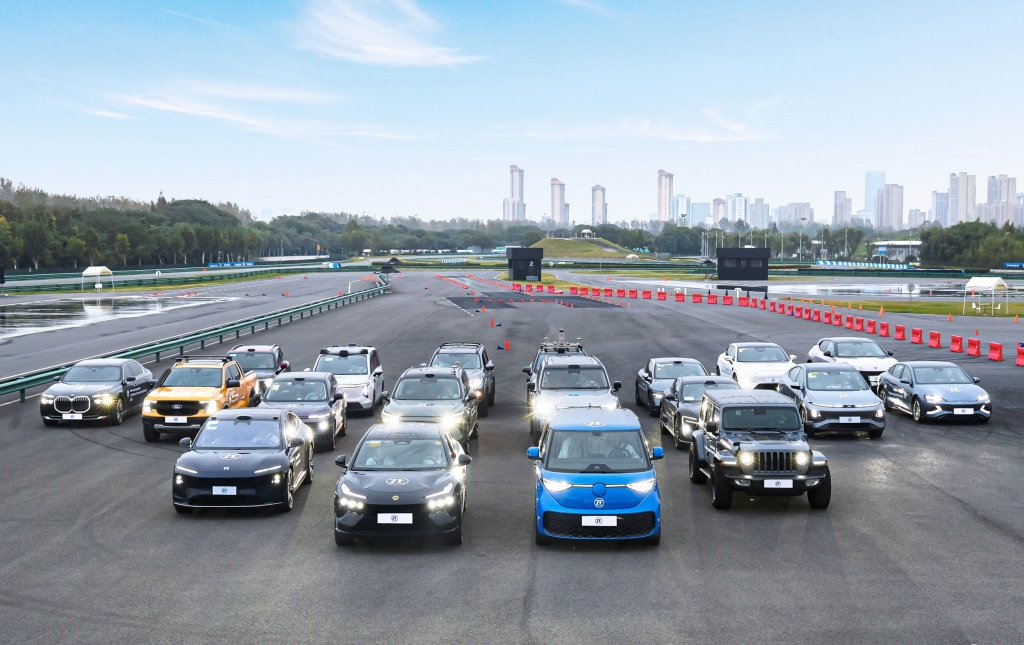
ZF’s Asia Pacific Innovation Day was recently held in Shanghai, where ZF showcased more than 20 engineering prototypes and about 70 technological achievements, including several global and China debuts in areas such as Chassis 2.0, electric drive systems, and intelligent driving.
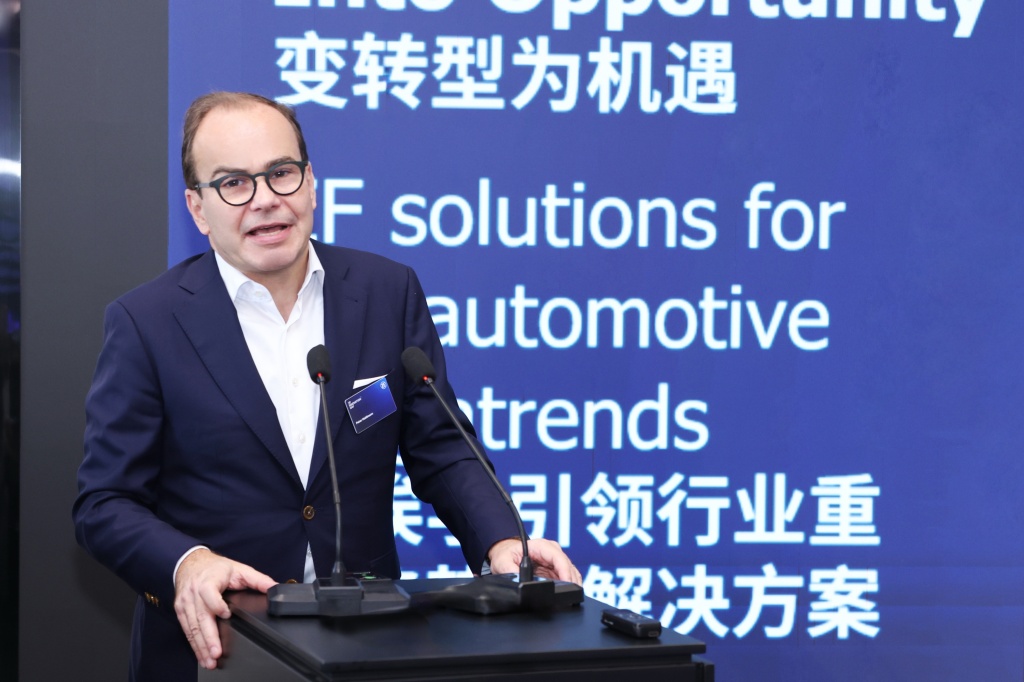
Peter Hodman, Director of ZF Group
Peter Hödmann, a board member of ZF Group, said that the Asia-Pacific region has become the company’s "technology hub and innovation center," and that the company will drive the development of intelligent electric mobility through software-defined vehicle solutions in the future.
The "Chassis 2.0" system, making its global debut at this event, integrates subsystems such as steering, braking, suspension, and electric drive through hardware and software decoupling and centralized control, all managed collaboratively by the unified software platform CubiX. This technology has already been demonstrated on an engineering prototype, with its steer-by-wire and active rear-wheel steering (AKC) components enhancing handling stability and supporting advanced autonomous driving functions. Also showcased were a direct-drive feel simulator and a steer-by-wire actuator based on a 48-volt architecture, further optimizing steering feel and system efficiency.
For urban driving scenarios, ZF launched the EasyTurn front suspension system in China for the first time. By increasing the maximum steering angle of the front wheels to 80 degrees, the turning diameter of D-class sedans is reduced to about 7 meters, significantly improving narrow road passability.
Meanwhile, the new generation of intelligent chassis sensors monitors the chassis status in real time through three-dimensional accelerometers. Through the collaboration of hardware and software, the expanded dataset lays the foundation for a series of intelligent and attractive functions and services, such as enabling continuous real-time monitoring of the status of chassis components, becoming a "digital health tracker" for vehicles.
According to ZF executives, the R&D cycle in the Chinese market has been shortened to 6-8 months, enabling the company to shift the role of its local teams from "technology adaptation" to "original R&D." For example, technologies such as the eRE Plus range extender system and planetary gear reducer were developed and launched globally for the first time by the Chinese team.
In the field of electric drive, ZF has launched the world’s first eRE Plus range extender system. This four-in-one drive platform can simultaneously achieve pure electric four-wheel drive and range extender modes, and is expected to reduce system costs by more than 30%. Mass production is planned to begin in the first quarter of 2026. The planetary gear coaxial reducer has achieved its first mass production globally, improving transmission efficiency while reducing size and weight. Furthermore, the localization project of the fourth-generation hybrid transmission has secured orders from leading domestic automakers, and production is expected to begin in the third quarter of 2026.
In the field of intelligent technology, ZF has partnered with Horizon Robotics to launch the coPILOT driver assistance system, which supports Level 3 functions such as City Navigation (NOA) and automatic parking. It is planned to be integrated into a Chinese brand’s electric vehicle platform in 2026. ZF has also launched mid-range domain controllers equipped with the Journey 6M chip and several intelligent camera solutions for different market segments.
In terms of passive safety, ZF LIFETEC showcased innovative solutions for smart cockpit scenarios: lumbar integrated airbags, ACR8 seatbelt retractors, zero-gravity seats, and the new generation heated seatbelt 2.0, which can improve the electric vehicle’s range by up to 6% during the preheating stage through optimized thermal management.
Wang Runyi, President of ZF China
Wang Runyi, President of ZF China, emphasized that China is a core pillar of ZF’s global strategy, and the company will continue to strengthen its local capabilities across the entire value chain, including R&D, manufacturing, supply chain, and ecosystem.
Currently, ZF has secured several important orders in China, including for steer-by-wire and electric drive systems. With several technologies slated for mass production in 2026, its local R&D and supply chain system is expected to further support collaborative innovation across its global operations.