From product access to recall management, a series of regulatory policies targeting intelligent vehicles have recently been implemented. The coordination and complementarity of these policies send a clear signal that regulatory authorities are promoting development through standardization.
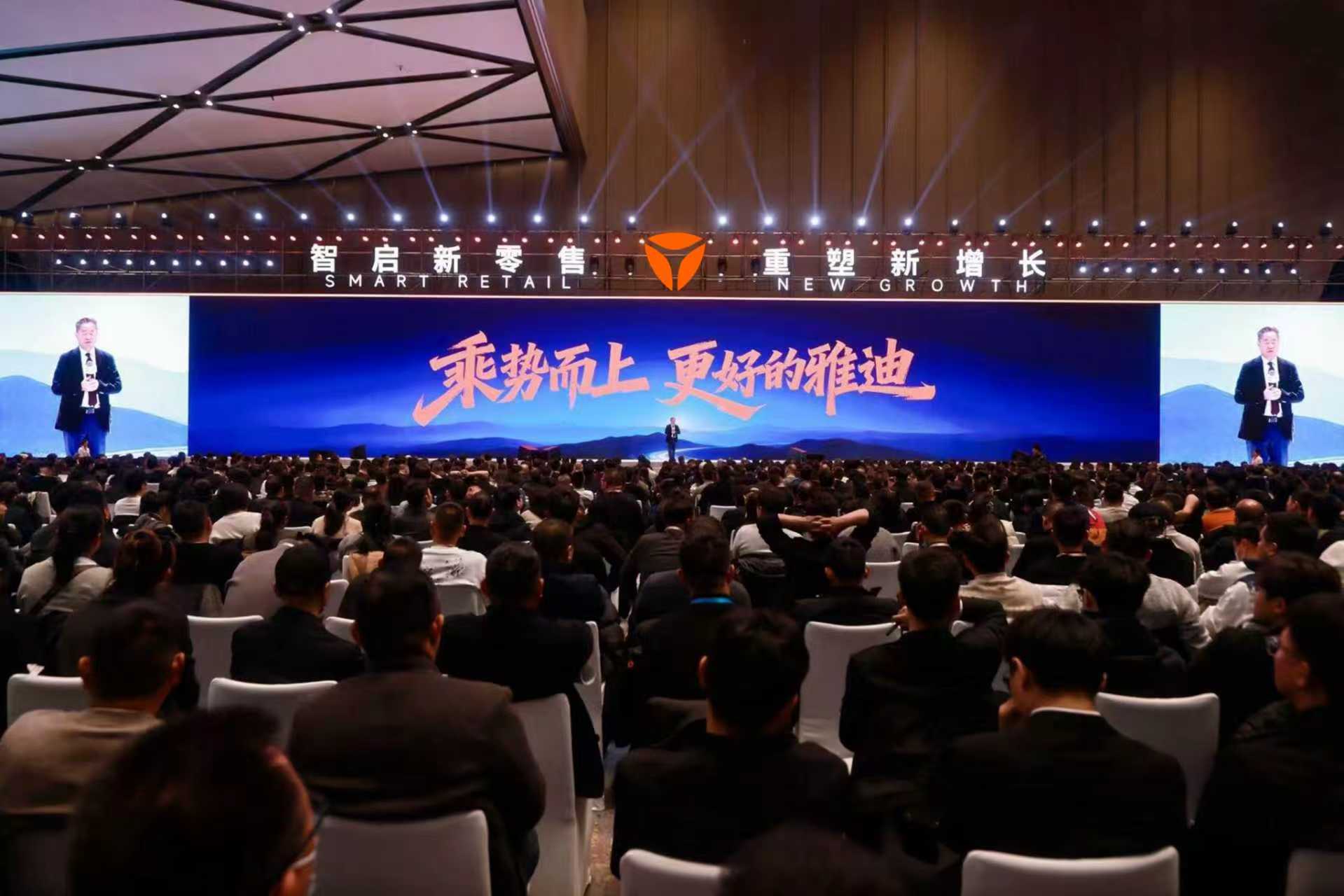
At the Intelligent New Energy Vehicle Supply Chain Innovation Conference, which opened on November 21, Huang Hongcheng, deputy director of the Intelligent Vehicle Research Institute of Shanghai Jiao Tong University, told The Paper that intelligent vehicles have entered an era of "strong regulation".
Data released by the Ministry of Industry and Information Technology shows that in the first half of the year, the penetration rate of Level 2 (combined driving assistance) passenger cars in China reached 55.7%, of which the penetration rate of new cars with navigation-assisted driving function was 11%. At the same time, potential problems in the field of intelligent vehicles are gradually emerging, such as exaggerated publicity, unregulated OTA online upgrades, and a disconnect between production and access standards, which are hindering the healthy development of the industry.
Since the beginning of this year, mandatory national standards such as the "Safety Requirements for Intelligent Connected Vehicle Combined Driving Assistance Systems" and the "Technical Conditions for Motor Vehicle Operation Safety" have been released for public comment. In addition, the "Notice on Further Strengthening the Management of Intelligent Connected Vehicle Product Access, Recall and Online Software Upgrade" and the "Administrative Measures for Safety Certification of Intelligent Connected Vehicles" have been successively issued.
Huang Hongcheng believes that China is leading the world in the intelligent vehicle race, which has resulted in a lack of comparable or exemplary policies and regulations. Currently, China is strengthening relevant regulations, both by "patching" existing systems (e.g., issuing new national standards for electric retractable door handles) and by proactively planning and improving existing systems (e.g., strictly regulating automakers’ over-the-air (OTA) updates).
Regarding the introduction of policies and regulations that are merely "patching up" existing ones, Huang Hongcheng emphasized that the lag between policies and emerging technologies is not unique to the intelligent vehicle industry, but rather a common phenomenon in the industry. Therefore, the introduction of policies requires careful consideration; inappropriate premature planning could even stifle technological innovation. He stressed that the core of government regulation is to draw a "red line" for enterprises through means such as entry standards, process norms, and post-event accountability.
In recent years, automakers have neglected safety issues in their advertising, leading to consumer misconceptions. For example, many automakers previously blurred the lines between Level 2 assisted driving and autonomous driving, which resulted in several accidents.
Huang Hongcheng stated that the most important task for enterprises is technological innovation, which is the core driving force for industry advancement. However, technological innovation must be based on safety. It is perfectly acceptable for enterprises to promote their technologies and products, but they must never cross the safety red line.
He added that there have been some discussions recently about "using non-automotive-grade parts in vehicles," which is a discussion that should not exist. Using automotive-grade parts is a "red line" in automobile manufacturing and should never be touched casually.
In the long run, stricter regulations will undoubtedly drive the industry towards more stable advancement. Looking ahead to the development of intelligent vehicles, Huang Hongcheng believes that next year is expected to be the first year of L3 (conditional autonomous driving) in China. Once this threshold of driver assistance leading to advanced autonomous driving is crossed, the industry will experience accelerated development.
Meanwhile, Huang Hongcheng noted that compared to the development path of new energy vehicles, the intelligent vehicle industry currently receives relatively few incentive and support policies. He also called for, under the premise of ensuring safety, to provide incentive policies such as subsidies and application demonstrations for the development of intelligent vehicles, so as to promote the industry to accelerate breakthroughs in core technology bottlenecks, expand commercialization scenarios, and consolidate China’s leading advantage in the global intelligent vehicle field.