Extended-range electric vehicles, which once rose rapidly due to their "no range anxiety," are now facing an unprecedented market downturn after a few years of glory.
"I don’t want to waste money," Mr. Liu from Beijing frankly stated. He explained that a range of over 600 kilometers is now common for pure electric vehicles, sufficient for daily use. He had considered buying a range-extended vehicle, but ultimately chose a pure electric model from a new energy vehicle brand. "You can’t just keep driving long distances like that. Normally, you need to stop at a service area to rest and recharge after every 200-300 kilometers." In his view, the long range advertised by range-extended vehicles is actually used very infrequently, yet incurs higher purchase and operating costs, making it simply not worthwhile.
This shift in consumer attitudes is clearly reflected in market data.
Range-extended acceleration stalls: Market turning point signals have emerged.
Range-extended electric vehicles are experiencing the growing pains of falling from their peak. Between 2021 and 2024, sales of range-extended vehicles achieved astonishing growth of 218%, 130%, 154%, and 70.9%, respectively. This dazzling growth curve came to an abrupt end in 2025.
According to the latest data from the China Passenger Car Association (CPCA), in October this year, wholesale sales of range-extended electric vehicles (REEVs) reached 121,000 units, a year-on-year decrease of 1.9%, while retail sales fell even further by 7.7% year-on-year. Since June this year, the proportion of REEVs in the overall new energy vehicle wholesale structure has declined for five consecutive months, reaching only 7.5% in October. Meanwhile, emerging electric vehicle manufacturers are rapidly adjusting their product strategies, with the proportion of pure electric vehicles in their product structure rising from 49% last year to 74%, while the proportion of REEVs has dropped from 51% to 26%, completely reversing the trend, with pure electric vehicles rapidly becoming the mainstream in the market.
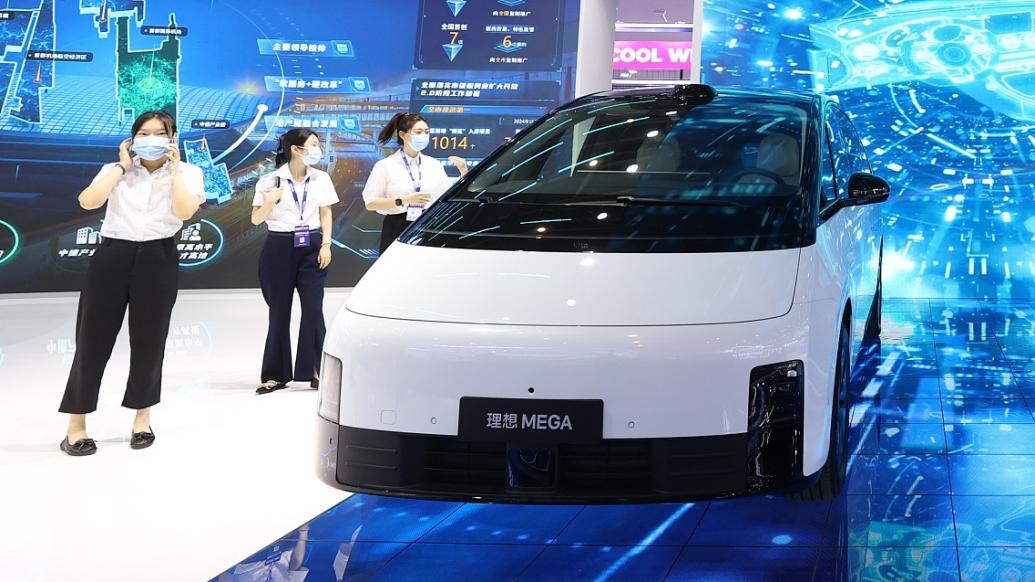
From a highly sought-after vehicle with triple-digit monthly sales growth to its current fall from grace, the market decline of range-extended vehicles is astonishing. Even Li Auto, the pioneer of the range-extended vehicle strategy, has not been spared. In October, Li Auto delivered 31,767 vehicles, a year-on-year decrease of 38.2%, marking its fifth consecutive month of decline.
Of course, not all range-extended vehicles are experiencing a downturn; rather, the market is facing both sluggish overall growth and intensified internal competition. A closer look at the market reveals a clear polarization among range-extended vehicles. According to data from October 2025, the Li Auto M7 remains the top-selling range-extended vehicle; the Li Auto L6 and Li Auto M8 follow closely behind, with sales approaching 10,000 units; the Voyah Free+, launched in July, also achieved impressive monthly sales of 5,239 units in August, ranking among the top three in the 200,000-300,000 yuan mid-to-large SUV segment.
An industry insider bluntly told reporters: "Range-extended electric vehicle technology enjoyed market benefits between 2021 and 2023, mainly because pure electric vehicles had insufficient range and charging infrastructure was inadequate at that time. As these two pain points have been resolved, the transitional nature of range-extended vehicles has become more and more obvious."
Advantages crumble: Pure electric technology accelerates the decline of competitive advantage.
With its "electricity for city driving, gasoline for long-distance driving" solution, range-extended vehicles precisely address the core pain points of early pure electric vehicles: short range and charging difficulties. During a period of insufficient charging infrastructure, this "gasoline or electric" usage logic truly resonated with users’ psychological needs.
However, the rapid advancement of pure electric technology is gradually eroding the very foundation of range-extended vehicles.
"With mainstream pure electric vehicles generally exceeding 600 kilometers in range, and some high-end models even reaching over 700 kilometers, charging once a week has become a reality," shared Mr. Yue, an owner of a new energy vehicle. The range anxiety that once plagued users is being significantly alleviated with breakthroughs in battery technology.
The improvement of charging infrastructure has dealt a fatal blow to range-extended vehicles.
As of the end of September 2025, the total number of electric vehicle charging facilities in China reached 18.063 million, a year-on-year increase of 54.5%, equivalent to two charging piles for every five electric vehicles (a vehicle-to-pile ratio of 2.5:1), far exceeding the levels in Europe and the United States. The problem of "charging difficulties" is also being visibly resolved.
The shift in policy direction has also put considerable pressure on the range-extended vehicle market.
Starting in 2026, the purchase tax policy for new energy vehicles will be adjusted. Extended-range vehicles eligible for tax exemption will need to meet stringent conditions such as "pure electric range of no less than 100 kilometers" and "energy consumption compliance." A large number of existing low-range models will be phased out, posing a dual challenge to automakers: inventory pressure and the cost of technology upgrades.
At the same time, the sharp drop in battery costs has further eroded the price advantage of range-extended vehicles.
The price of battery-grade lithium carbonate has plummeted from 600,000 yuan/ton in 2023 to 70,000-80,000 yuan/ton today, significantly reducing the cost of pure electric vehicles. The price of some pure electric vehicles is now on par with, or even lower than, comparable plug-in hybrids/range-extended electric vehicles.
To discuss the decline of range-extended electric vehicles, we must also discuss the explosive growth of pure electric vehicles. Cui Dongshu, Secretary-General of the China Passenger Car Association, confidently pointed out when analyzing the shift between these two extremes, "Currently, pure electric vehicles are clearly more competitive and have more obvious overall advantages." He cited examples such as the convenience of battery swapping and other energy replenishment facilities, coupled with price discounts under financial subsidies, highlighting their higher cost-effectiveness. Starting in June and July, pure electric models like the Ledao experienced explosive growth.
Route Game: Can Large Batteries Become the Savior of Range Extension?
Faced with market challenges, range-extended vehicles are seeking technological breakthroughs, and "large battery and small fuel tank" and "large battery and large fuel tank" have become the focus of a new round of technological iteration.
Recently, many automakers have launched extended-range models with large batteries: XPeng X9 Super Extended Range is equipped with a 63.3 kWh battery, with a pure electric range of 452 kilometers; Leapmotor D19 has a battery capacity of over 80 kWh, with a pure electric range of up to 500 kilometers; and Zhiji LS6 Extended Range Edition has a pure electric range of over 450 kilometers.
"The vehicle is equipped with a large fuel tank, giving users flexible refueling options," explained He Xiaopeng, CEO of XPeng Motors, regarding their choice of a "large battery + large fuel tank" solution. In his view, this resolves long-distance anxiety while avoiding unnecessary burdens in daily use.
A joint survey by the China Automotive Technology and Research Center (CATARC) and the Zhiji User Research Institute provides data support for this trend: a pure electric range of 333 kilometers can meet the urban commuting needs of over 92% of new energy vehicle users; a range of 300 kilometers can cover the weekend short-distance round trips of 92.4% of users.
However, the large battery strategy has also sparked new controversies. Many industry veterans believe that the large battery range extension may be a marketing gimmick by automakers, hiding multiple problems behind it.
On the one hand, range-extended vehicles are generally more than 200 kilograms heavier than their corresponding pure electric counterparts, which not only increases daily energy consumption but also affects handling. On the other hand, the core components of range extenders, such as the internal combustion engine and power generation system, have complex structures, perpetuating the shortcomings of internal combustion engine vehicles—high failure risk and high maintenance costs.
One critic pointed out incisively: "When the pure electric range of range-extended vehicles reaches 400-500km, which is the level of entry-level pure electric vehicles, the range extender it carries is downgraded from a core component to an emergency device. Is the additional purchase cost of 20,000-30,000 yuan (range extender + fuel tank system) worth it?"
With the rapid popularization of supercharging networks and the gradual penetration of 800V high-voltage platforms, as pure electric vehicles with a range of 700 kilometers and supercharging that can replenish 400 kilometers of range in 10 minutes become a reality, the flexible energy replenishment advantage of range-extended electric vehicles is being diluted day by day. Based on this, many industry insiders have expressed a cautious attitude towards the future of range-extended vehicles. In the longer term, the accelerated development of solid-state batteries may be the end of range-extended electric vehicles.
Some argue that range-extended vehicles still hold a place in specific markets. In rural areas with insufficient charging infrastructure, and in the commercial vehicle sector where long-distance travel and refueling availability are uncertain, range-extended technology still has value. However, its competitiveness will continue to weaken in mainstream urban markets.
Li Guang (pseudonym), an engineer from a new energy vehicle company, believes that the range-extended vehicle market will undergo a deep reshuffle and may shrink to about one-third of its current size in the future, mainly serving areas with underdeveloped charging infrastructure and vehicles for specific purposes.
Driven by both technological innovation and market selection, range-extended electric vehicles, once seen as a "transitional solution," may have to face the reality that their mission is nearing completion.