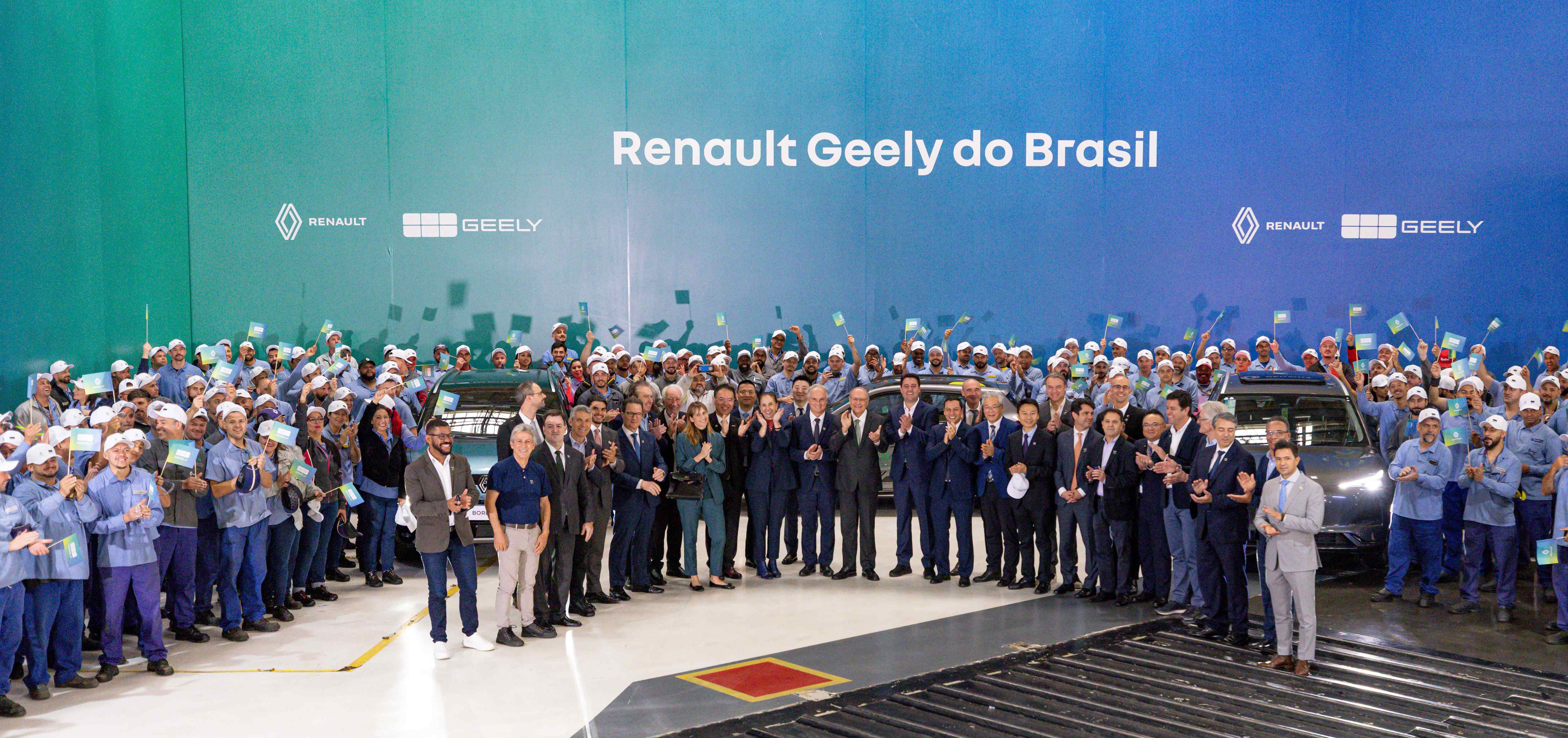
The Renault Industrial Park in São José do Spínias, Paraná, Brazil, hosted a landmark event, witnessing a new stage of globalization for Chinese automakers, moving from product exports to mutually beneficial technological collaborations.
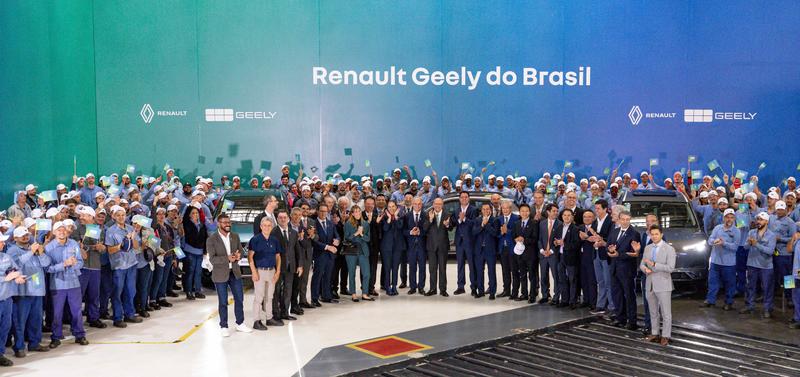
On November 18, Brazilian Vice President Alquemín and Paraná State Governor Latíño Junior will jointly attend a major launch event at the Renault Group industrial park in São José dos Piñas. This event marks the official launch of the strategic cooperation between Geely Automobile and the Renault Group in Brazil, and also signifies a crucial step for Geely in South America, one of the world’s largest automotive markets.
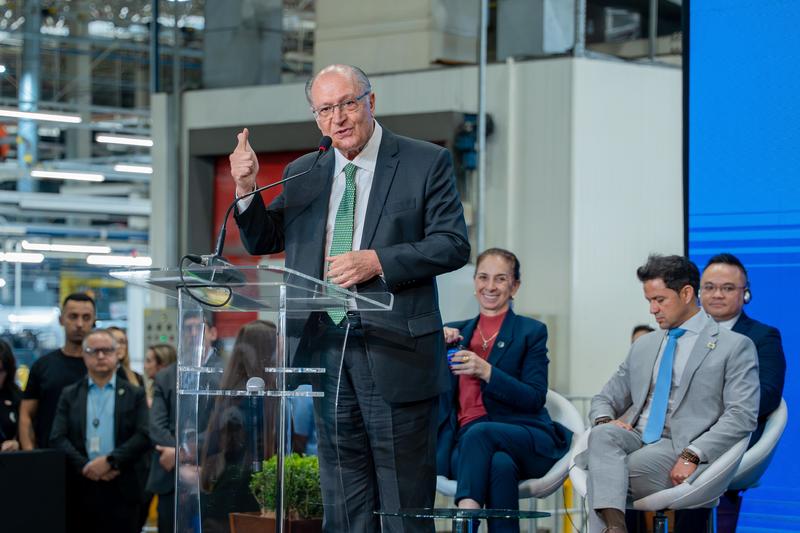
Brazilian Vice President Geraldo Alquemin delivered a speech.
During the event, Brazilian Vice President Jaalquemin, Mayor Nina Singh of São José do Spinás, and other government officials, along with representatives from the Chinese Consulate in São Paulo, witnessed this milestone moment together with Renault CEO Fabrice Campolif, Geely Holding Group Senior Vice President Yang Xueliang, and other corporate executives. This high-level event fully demonstrates the great importance that both governments attach to this cooperation.
Brazil-China Cooperation: A Win-Win Model for Coping with Global Competition
Geely is adopting a "light asset" model to enter the Brazilian market, forming a strategic partnership with the Renault Group that complements each other’s strengths. According to the agreement, Geely will hold a 26.4% minority stake in Renault Brazil, allowing it to share Renault Brazil’s industrial and commercial resources and accelerate its expansion in South America’s leading automotive market.
This collaborative model is clearly a win-win situation, as both parties can expand the use of different platforms, industrial tools, engineering technologies, and distribution networks.
Another important practical consideration for this collaboration is to improve the factory’s capacity utilization rate. Renault’s Elton Senna industrial park in Curitiba, Brazil, established in 1998, covers 250 hectares and houses two vehicle assembly and light commercial vehicle production plants, employing approximately 5,000 people. In 2024, the park produced 188,000 gasoline-powered vehicles, selling 140,000 in Brazil, achieving a market share of 5.6%.
Renault Brazil’s Ayrton Senna Industrial Park
By partnering with Geely, the factory’s production lines will be fully activated, which will not only reduce unit production costs but also improve the overall operational efficiency of the factory.
Latin America Strategy: From Brazil as the Core to Regional Outreach
Brazil, as Latin America’s largest automotive market, is seen by Chinese automakers as a new growth opportunity. Statistics show that Brazil is one of the largest and most promising automotive markets in Latin America, with total sales reaching approximately 2.486 million vehicles in 2024, a year-on-year increase of 14%. Despite facing structural challenges such as high taxes and a high vehicle-to-income ratio, the electrification transformation is accelerating.
Geely positions Brazil as the core of its Latin American strategy, aiming to create a "South American growth pole" in the coming years through localized manufacturing, product launches, and regional expansion.
According to the plan, Geely and Renault will launch a number of localized new energy products based on GEA platform technology in Brazil in 2026-2027, covering more market segments and meeting Brazilian consumers’ demand for high-quality, intelligent and green travel.
Geely Auto has made initial progress in the Brazilian market. Since its official entry into Brazil in October 2024, the Gekk 001 and Gekk X, two high-end pure electric models, have entered the top three in the Brazilian high-end pure electric vehicle market in just six months, fully demonstrating the international competitiveness and user appeal of Chinese high-end new energy brands.
Meanwhile, the Geely EX5 EM-i is also being sold in Brazil through Renault’s dealer network. This model has been launched in markets such as China, Australia, New Zealand, Poland, Thailand, Mexico, and Indonesia, and has achieved excellent sales and user reputation.
Geely-Renault Synergy: From Asia to the World
Geely and Renault have a long-standing partnership, with the Brazil project being the latest addition and demonstrating the high degree of complementarity in their global strategies. This collaboration began three years ago and has since expanded to several key markets and technology areas.
In January 2022, Geely Holding Group and Renault Group signed a cooperation agreement to launch a new model lineup for the South Korean market. In May of the same year, Geely Automobile acquired a 34.02% stake in Renault Korea through a capital increase mechanism, and the transaction was completed on December 1 of the same year.
Since 2024, Renault Korea has launched an energy-saving hybrid HEV D-class model based on Geely’s latest technology. This model, known as the Grand Koleos in the Korean market, has become one of the best-selling SUVs in the country, consistently ranking among the top sellers.
In the field of powertrain, the cooperation between the two parties has deepened further. In June 2024, Saudi Aramco signed an agreement to acquire a 10% stake in HORSE Powertrain Limited, a company jointly established by Renault Group, Zhejiang Geely Holding Group, and Geely Automobile Holding.
As of December 2024, Saudi Aramco completed the equity transfer, valuing HORSE at €7.4 billion; Renault Group and Geely each hold 45% of the shares. This collaboration leverages the R&D and resource advantages of the three parties in powertrain, synthetic fuels, and lubricants to jointly promote the development of low-carbon mobility technologies and the construction of Tier 1 supply capabilities.
From product trade to standards setting
Geely’s overseas expansion has evolved from simple product trade to a win-win model of technology licensing and brand sharing, which is an important sign of the rise of China’s automotive industry’s global status.
In recent years, technology licensing has become a new profit growth point for Geely. Data shows that Geely’s cumulative revenue from technology licensing fees is approximately 20 billion yuan, a figure that highlights the enormous commercial value brought about by Geely’s technological innovation.
In April 2025, Geely Automobile Group announced that it had joined the International Automotive Standards Cooperation Organization (IATF), becoming the 10th automotive group member of the IATF International Automotive Working Group and having voting rights on the board of directors.
Geely is the first Asian member in the history of the IATF to have voting rights, representing Chinese automakers in the development of international standards. IATF members include five non-profit associations and nine international automakers such as Peugeot Citroën, Renault, Ford, GM, and Daimler. Geely’s inclusion signifies that a Chinese automaker has for the first time entered the core circle of global automotive standards development.
Geely has invested more than 250 billion yuan in R&D over the past 11 years, making it one of the Chinese automakers with the highest R&D investment.
Geely possesses industry-leading capabilities in areas such as architecture, electric drive, hybrid electric vehicles, safety, and intelligent driving. Its Thor hybrid electric technology has been integrated into multiple models, gaining popularity among global users and achieving international expansion, earning recognition from high-end overseas brands.
The Renault Grand Koleos, a best-selling model in the South Korean market, is equipped with Geely’s hybrid technology, setting a new benchmark for hybrid vehicles in the local market.
Record growth in global business
As an automotive company that originated in China and has expanded globally, Geely Holding’s business spans more than 100 countries and regions. It has been listed in the Fortune Global 500 for 14 consecutive years and is projected to rank 155th in 2025. This achievement reflects Geely’s comprehensive strength and brand influence in the global automotive industry.
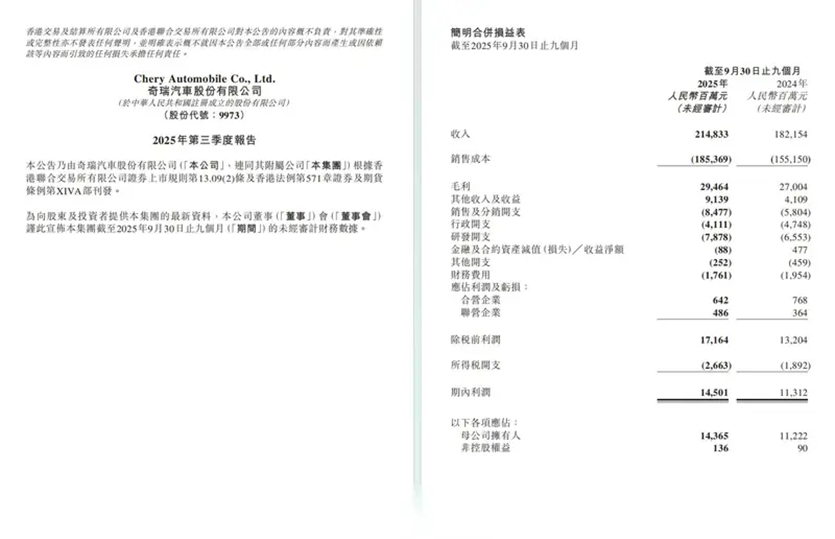
According to the latest financial report, Geely Automobile’s revenue reached 89.2 billion yuan in the third quarter of 2025, setting a new record for the highest single-quarter revenue, representing a year-on-year increase of 27%.
In 2024, Geely Holding’s global sales reached 3.337 million vehicles, a year-on-year increase of 22%, ranking tenth among global automotive groups in terms of annual sales; among which, Geely Holding’s overseas sales exceeded 1.22 million vehicles, a year-on-year increase of approximately 21%.
In the first three quarters of this year, Geely Holding’s global sales exceeded 2.95 million vehicles, a year-on-year increase of 29%, ranking eighth in the world; among them, sales of new energy vehicles were nearly 1.6 million vehicles, a year-on-year increase of 68%, and the penetration rate of new energy vehicles reached 54%, which is in a leading position among global automakers.
In terms of regional revenue composition, in 2024, Geely’s revenue from the Chinese market accounted for 77.56%, Eastern Europe accounted for 12.59%, and Latin America accounted for only 0.80%. This indicates that Geely still has ample room for growth in emerging markets such as Latin America, and cooperation with Brazil will become an important fulcrum for expanding into this market.
From its factory floor in São José dos Pinhas to its competitive position in the global automotive industry, Geely’s globalization strategy is evolving from "bringing your own pot and pan to cook on someone else’s turf" to a win-win model of "partnering with locals to cook together, ensuring everyone benefits." In its cooperation with Brazil, both parties are jointly cultivating the Latin American market.
This "global resource synergy" model is changing the overseas expansion path for Chinese automakers. As Geely and Renault’s cooperation in Brazil deepens, it will not only provide a new path for the globalization of China’s automotive industry, but also help the electrification transformation of the automotive industry in Brazil and even the entire Latin American region, achieving true intercontinental collaboration.